Start by tasting for what is missing
When a meal tastes unfinished, it is tempting to reach straight for the salt. Sometimes that works. Other times, a squeeze of lemon, a little olive oil, or a few more minutes in the pan would do more. Salt, acid, fat, and heat are useful things to check because each changes the way a dish tastes and feels.
Taste a small bite that includes the main parts of the meal: for example, rice and vegetables together, or pasta with its sauce. Ask a specific question. Is it bland, heavy, dry, or undercooked? Make one small adjustment, mix it in, and taste again. This is easier than adding several ingredients at once and trying to work out which one helped.
Use salt to bring flavors into focus
Salt helps the existing flavors of food stand out. A pot of beans, a tomato sauce, or a tray of roasted vegetables may seem muted when it needs a little more. Add salt in modest amounts, stir or toss thoroughly, and give it a moment to distribute before tasting again. For food with several components, season each component lightly rather than relying on a final sprinkle to do all the work.
Remember that ingredients such as olives, cheese, soy sauce, and salted butter contribute salt too. If they are going into the finished dish, taste after adding them. When food is already too salty, adding more unsalted ingredients can sometimes spread the seasoning across a larger amount of food. A splash of water may help a soup or sauce, though it can also thin its flavor.
Add acid when a dish feels heavy or dull
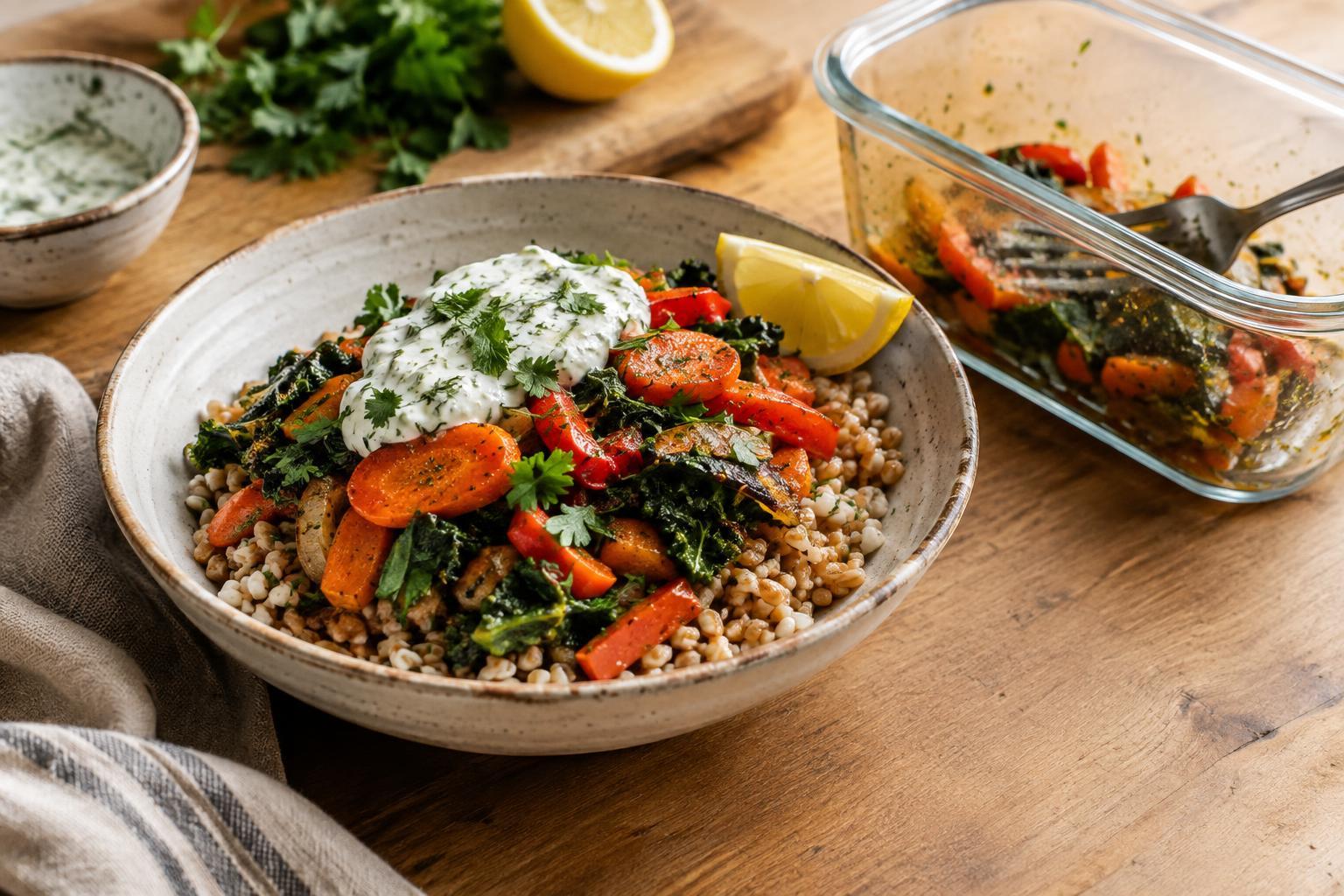
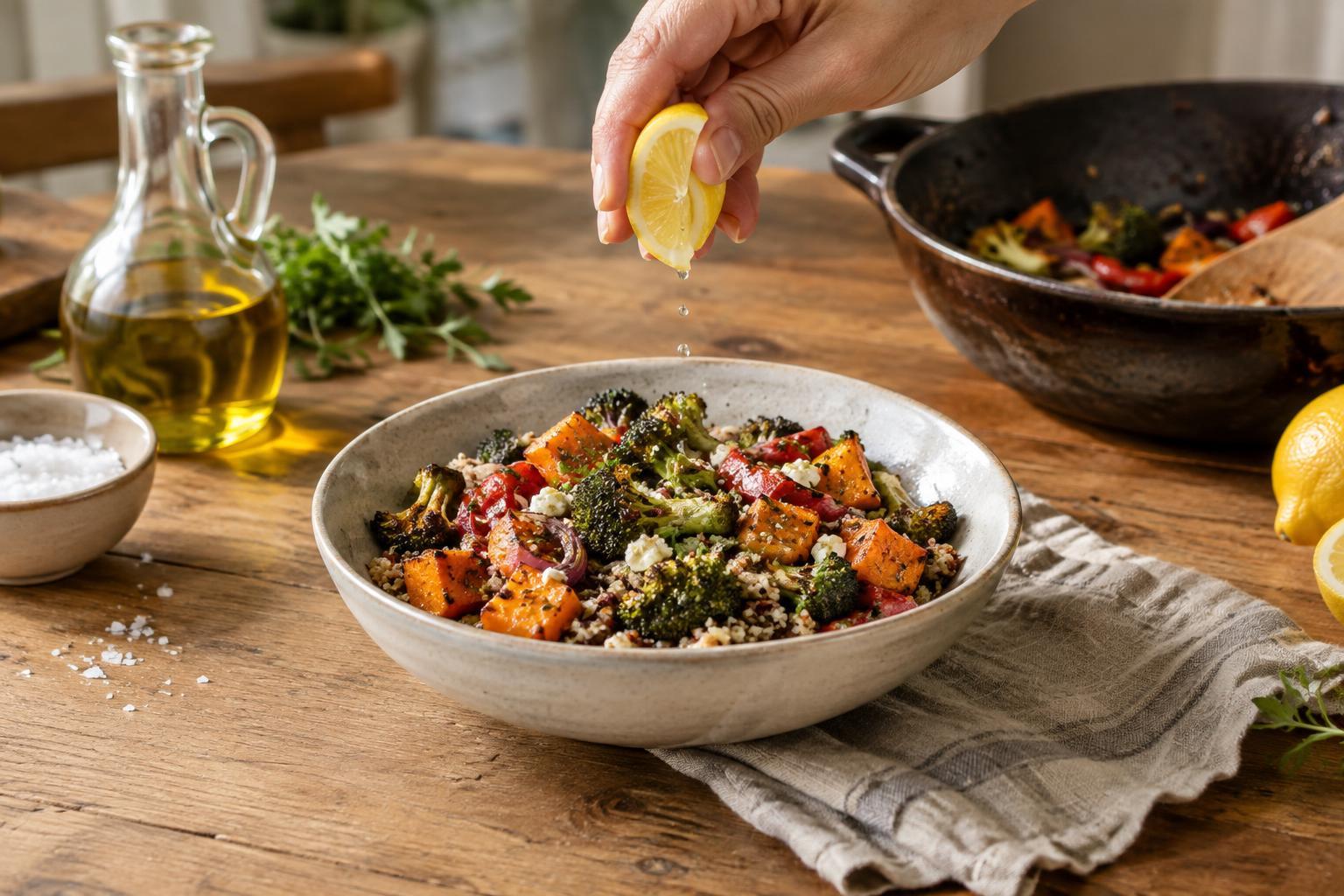
Acid can make a rich or mild dish taste livelier. Lemon juice over roasted potatoes, a little vinegar in a lentil soup, or a spoonful of yogurt beside spiced vegetables can provide contrast. Many tomatoes and pickled ingredients bring acidity of their own, so check what is already in the meal before adding more.
For the clearest comparison, put a drop of lemon juice or vinegar on one spoonful and taste it alongside an untouched spoonful. If the brightened bite tastes better, add a small amount to the whole dish. Stir and taste before adding more. Too much acid can make a meal seem sharp rather than balanced; a little fat or additional plain ingredients may soften that impression.
Use fat for richness and texture
Fat carries flavor and gives food a fuller mouthfeel. Olive oil can round out a bean salad, butter can make a simple sauce feel smoother, and a spoonful of yogurt can add creaminess while also bringing some tang. You do not need a large amount to notice a difference: start with a drizzle or a small spoonful, depending on the size of the dish.
Fat is especially useful when a meal tastes dry or lean, but it is not a cure for every problem. If a creamy pasta tastes flat, check its salt and acidity before adding more butter or cheese. If sautéed vegetables feel oily, a squeeze of citrus or a spoonful of vinegar may provide contrast. The aim is not to maximize richness; it is to give each bite a comfortable balance.
Let cooking heat do its part
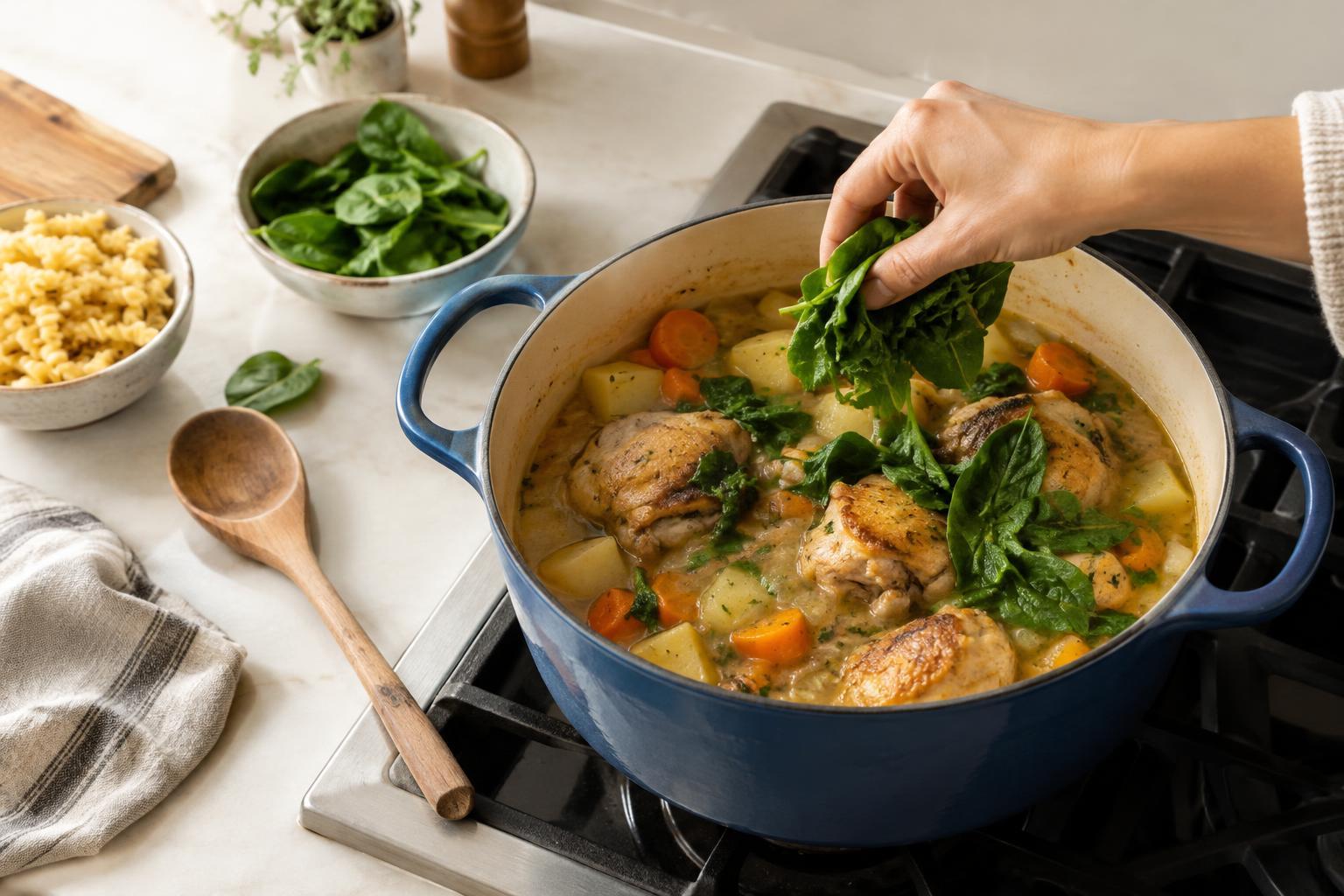
Heat is different from a final seasoning because it changes food as it cooks. A hot pan can brown vegetables and give them deeper flavor; a gentle simmer can soften beans or help a sauce come together. Match the heat to the result you want. Crowding a pan with wet vegetables can make them steam instead of brown, while rushing a thick sauce over high heat may scorch the bottom before the rest is ready.
When dinner tastes bland, ask whether it is seasoned enough and whether it has been cooked the way you intended. Vegetables that are still watery may benefit from more time in a roomy pan. A sauce that has become too thick may need a splash of water and gentle heat to loosen it. If by “heat” you mean chili warmth, treat that as a separate preference: add a little at a time so it does not overwhelm the other flavors.
A useful finishing routine is simple: take a representative bite, adjust one thing, then taste again. With practice, the question shifts from “What should I add?” to “What does this meal need?” That small pause can make ordinary ingredients feel more complete.