Start with the floor and the space
Before comparing colors or textures, look at where the mat will sit. A mat outside a shower needs to absorb water from wet feet, but it also needs enough clear floor space to lie flat. Measure the area with the bathroom door open and check that the mat will not catch beneath it. Leave room around the edges so you can lift the mat easily and the floor underneath can dry.
Floor texture matters too. A backing that grips smooth tile may behave differently on textured tile or a floor with wide grout lines. If your floor often gets wet beyond the edge of the mat, treat that as a separate issue: a bath mat helps with drips, but it cannot make a wet floor slip-proof. Wipe up standing water rather than relying on the mat to contain it.
Choose a surface that can release moisture
Plush cotton feels soft and absorbs water readily, but a thick pile can take longer to dry, especially in a bathroom with little airflow. A lower-pile cotton mat or a lightweight woven mat is easier to hang between uses and often more practical in a small, busy bathroom. Check whether it can be machine washed and dried according to its care label; straightforward cleaning makes a mat easier to keep in regular use.
Microfiber mats are often chosen for their soft feel and relatively quick drying, though performance varies with thickness and construction. Some firm mats made from absorbent mineral-based materials have a different appeal: they offer a flat surface rather than a fabric pile. They may need wiping or other specific care instead of laundering, and they can feel hard underfoot. Choose the feel and maintenance routine you will actually enjoy living with, not just the quickest-drying description on a label.
Look closely at what keeps it in place
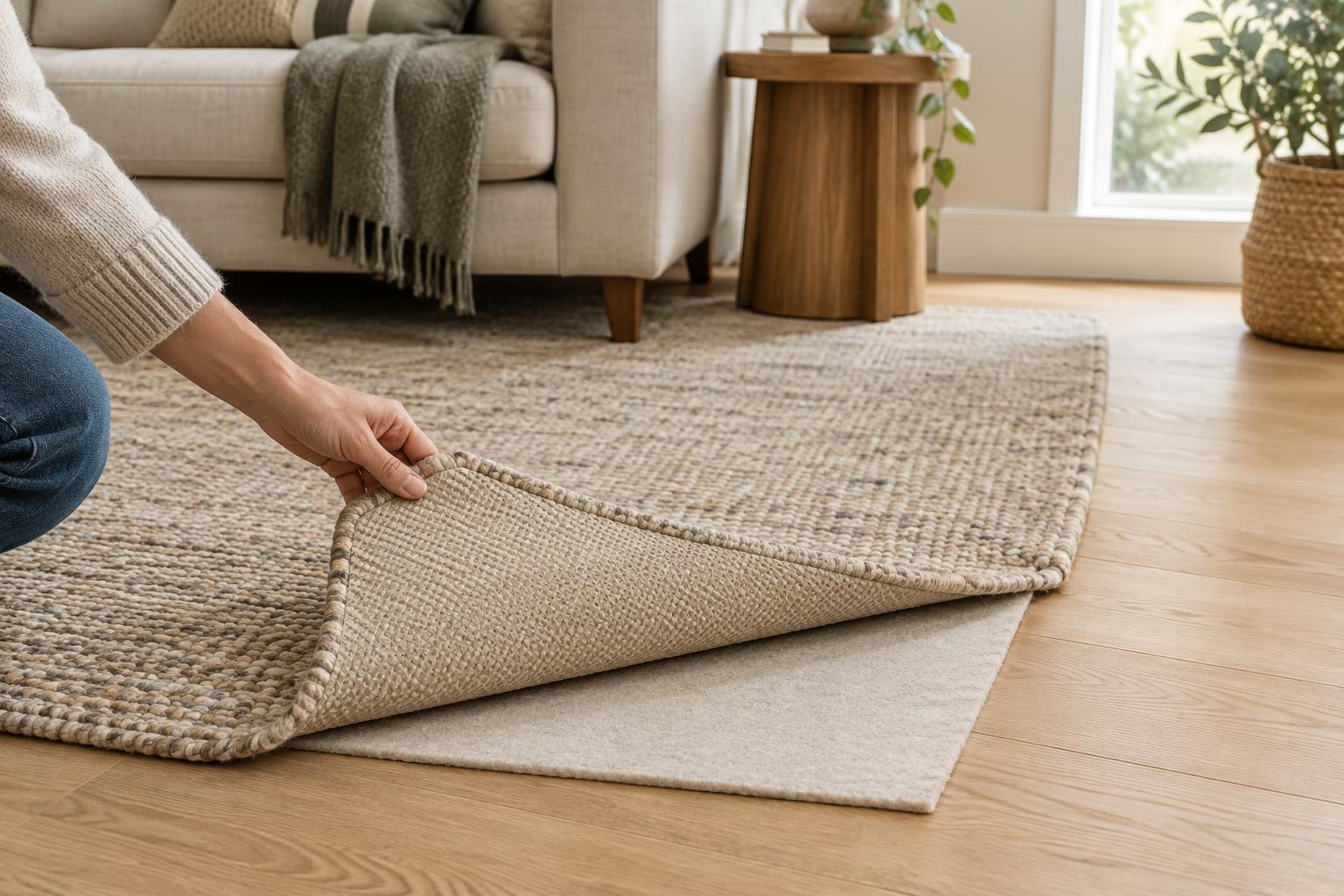
A mat can have an absorbent top and still be frustrating if it moves when stepped on. For fabric styles, inspect the underside for a continuous grippy backing or a design intended to resist sliding. Avoid assuming that a label such as “non-slip” guarantees the same grip on every floor. If possible, test the mat on your own clean, dry floor by stepping onto it normally and checking whether its corners lift or its edges shift.
Backing also affects drying. A dense, water-resistant underside may help the mat grip, but moisture can remain trapped between it and the floor. Lift the mat after a shower if the underside or floor feels damp. Follow the manufacturer’s washing and drying directions for backed mats, since unsuitable heat or cleaning can damage the backing. If you prefer an unbacked washable mat, check whether a separate compatible underlay keeps it secure without making care cumbersome.
Get the size and shape right
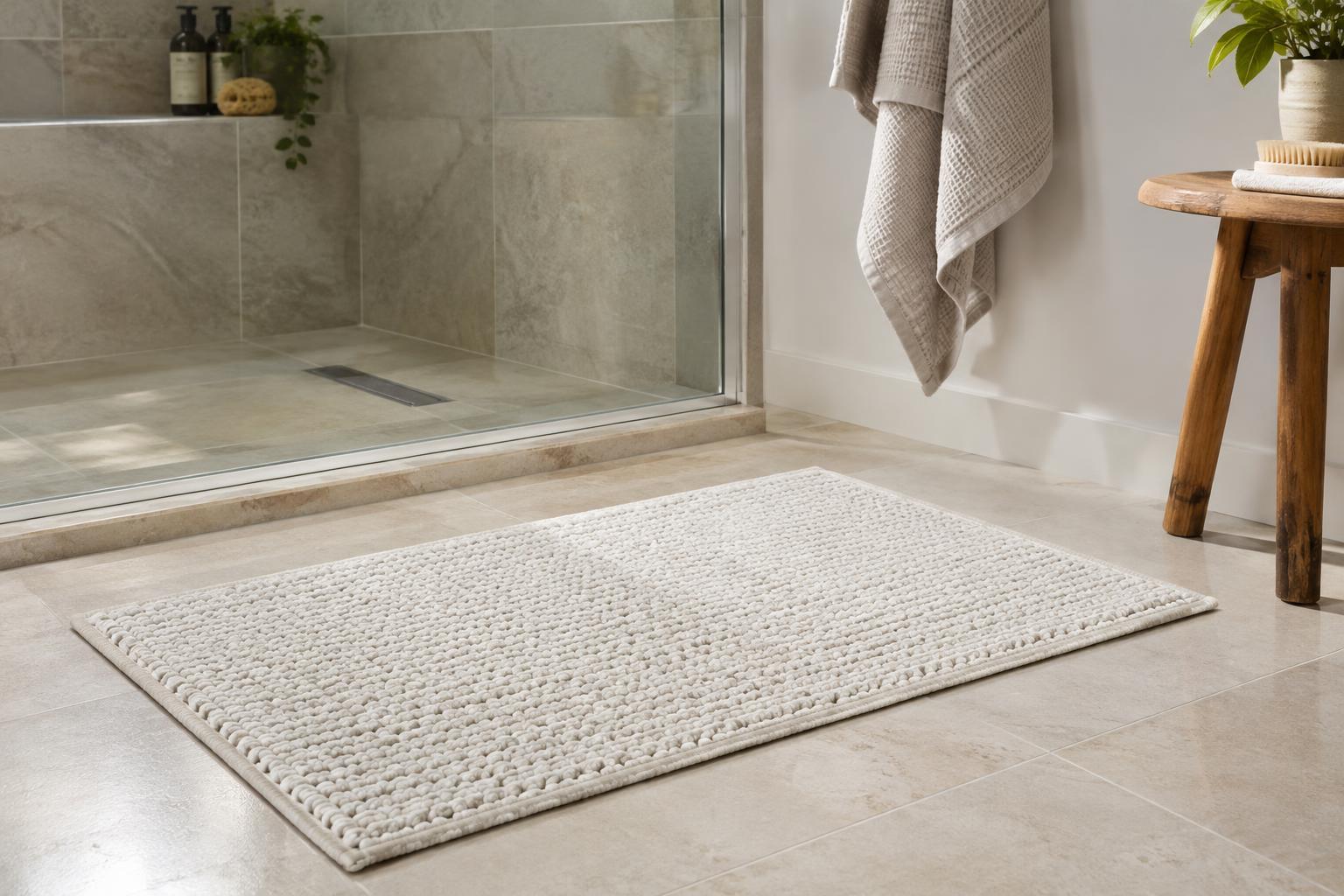
A useful bath mat gives you a natural place to step with both feet when leaving the shower or tub. Too small, and you may step around it; too large, and it may bunch against a vanity or stay folded beneath the door. A rectangular mat suits many layouts, while a narrower shape can work better in a tight bathroom. Consider where you stand to dry off, not just where the shower door ends.
Pay attention to edge construction as well. Flat, well-finished edges are less likely to curl into your path than a mat that never lies evenly. A lightweight mat may be easy to wash and hang, but it should not feel so flimsy that it wrinkles underfoot. If the mat is for a shared bathroom, favor a size and placement that work for everyone who uses the room.
Make drying part of the routine
Even a quick-drying mat needs airflow. After bathing, spread it flat where air can circulate or hang it if the care instructions allow. Avoid leaving it crumpled on the floor or pressed against a damp wall. If several people shower in close succession, consider whether one mat has enough time to dry between uses. A second washable mat can make rotation easier without changing your bathroom setup.
The simplest buying checklist is practical: choose a surface that suits your feet, a backing that works on your floor, a size that lies flat, and care instructions you can follow. When the mat arrives, check it in place before making it part of your routine. If it slides, curls or keeps the floor underneath damp, a different construction is likely a better fit than simply getting used to it.