What a lid changes
A lid is one of the simplest ways to change what happens inside a pan. With the lid on, steam stays close to the food and moisture collects on the underside before dripping back down. This can help ingredients soften without needing much added liquid. With the lid off, steam escapes, liquid reduces, and surfaces have a better chance to dry out.
Neither position is automatically better. The useful question is what you want the food to do next. If vegetables are still firm and the pan looks dry, covering them briefly may help. If a sauce tastes right but seems too thin, leaving it uncovered gives excess water somewhere to go. Think of the lid as a control you can adjust during cooking, not a choice you must make once at the start.
Cover the pan when you want to soften or retain moisture
A covered pan is useful for cooking firm vegetables after a quick sauté. Add a small splash of water, put on the lid, and let the trapped steam help soften pieces such as carrots or broccoli. Check them after a short interval rather than leaving them unattended. Once they are nearly tender, remove the lid so remaining moisture can evaporate and any seasoning can coat the vegetables instead of pooling underneath.
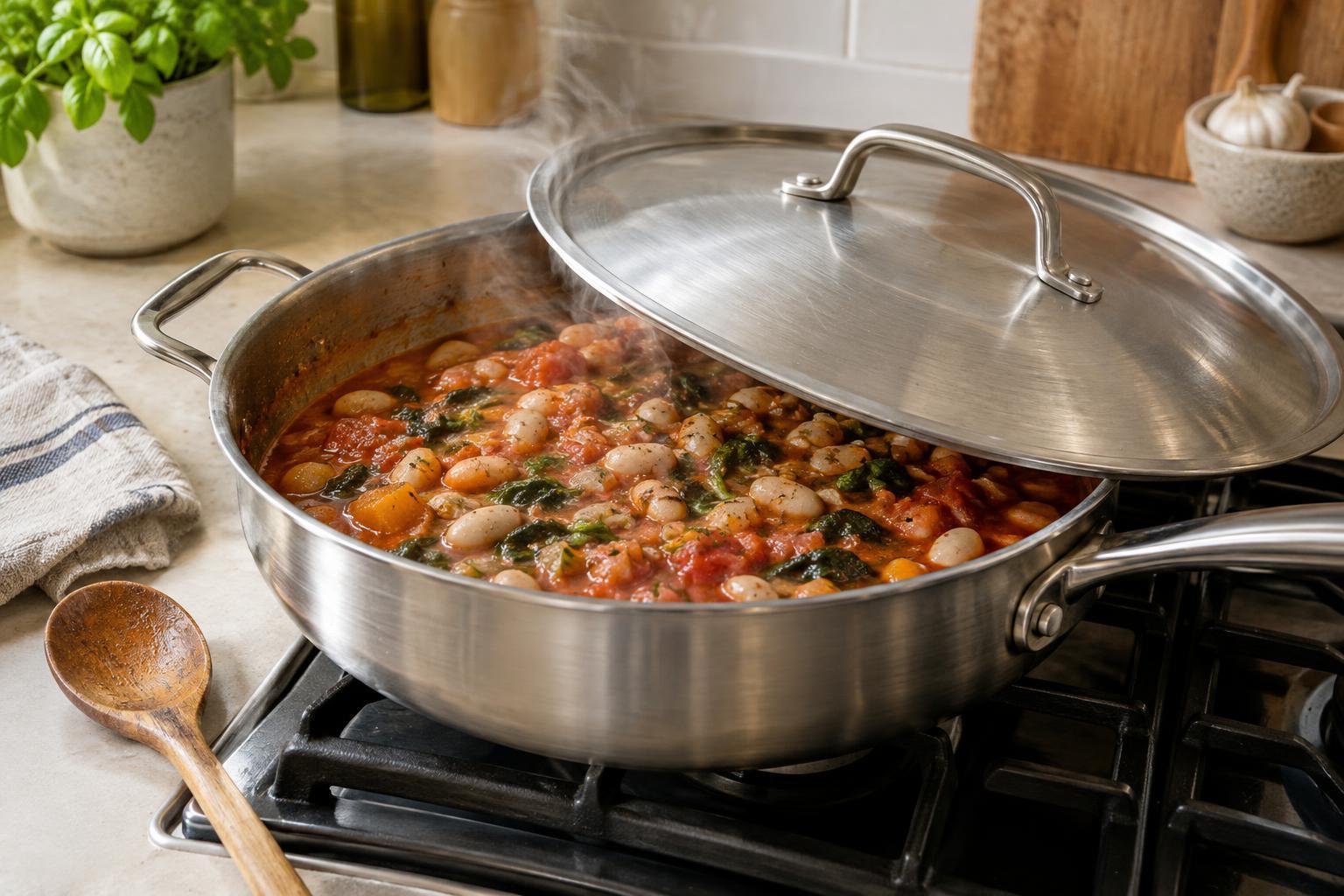
Covering also suits a gentle simmer when you want to limit evaporation, as with a pot of beans or a stew that still needs time for its ingredients to soften. A lid will not stop all evaporation, and a vigorous boil can still make the pot bubble over. Lower the heat if the liquid is climbing toward the rim. When lifting the lid, tilt it away from you so the escaping steam does not rise into your hand or face.
Leave it off when you want less liquid or more browning
An uncovered pan lets moisture escape. That matters when reducing a tomato sauce, thickening a soup that has become watery, or cooking off liquid released by mushrooms. Stir occasionally and watch more closely as the liquid level drops: a sauce that seemed slow to change can begin sticking once there is less water in the pan. If it becomes too thick, add a little liquid and stir.
The lid also affects browning. Food generally needs a relatively dry surface to brown well, so covering a pan while trying to sear ingredients can work against you: steam collects and the food may soften instead. Leave the lid off, give pieces space, and allow moisture to cook away. If the pan starts smoking heavily or the food darkens faster than it cooks through, lower the heat rather than putting on a lid as a substitute for heat control.
Use a partial cover when you need both effects
Some dishes benefit from a compromise. Setting a lid slightly ajar can slow evaporation while still allowing steam to escape. This can be helpful for a sauce that needs a long, gentle simmer but is splattering onto the stovetop. Check that the lid sits securely; an unstable lid can slide, and a narrow opening may still direct hot steam toward you.
You can also change the lid position in stages. For a skillet dinner, cook firm ingredients with a splash of liquid and the lid on, then uncover to evaporate that liquid before adding a sauce. For a pot of soup, simmer covered while the ingredients soften, then uncover if you want a more concentrated result. These small adjustments are often easier than trying to predict the exact amount of liquid the dish will need from the beginning.
Make the decision by looking at the pan
When you are unsure, pause and look for a few simple clues. Is the food still firm, with little liquid left? A brief covered cook may help it soften. Is the food tender but sitting in unwanted water? Remove the lid and let some moisture escape. Are you aiming for a browned surface? Keep the pan uncovered and avoid crowding it.
Check again as the food changes. A lid can help you move from firm to tender, but taking it off at the right moment may be what turns a damp panful of ingredients into a finished dinner. The aim is not to follow a universal lid rule; it is to notice whether the pan needs to hold on to moisture or let it go.