Start with the week you really have
A small jewelry rotation does not need to include every type of piece. It needs to suit the clothes you wear, the things you do, and the amount of attention you want to give your accessories. Before buying anything, notice what you already put on for an ordinary workday, an errand, a meal out, or a quiet weekend. The pieces that survive those different settings are a better starting point than the ones you admire but rarely remove from their boxes.
Lay out your jewelry and sort it into three groups: worn often, liked but rarely worn, and no longer right for you. For the middle group, ask what gets in the way. Is a necklace too short for your usual necklines? Do earrings feel heavy by lunchtime? Does a ring catch on clothing? These answers reveal practical requirements, not failures of taste. Set aside anything that needs repair rather than treating it as part of your ready-to-wear rotation.
Choose a core, then leave room for variety
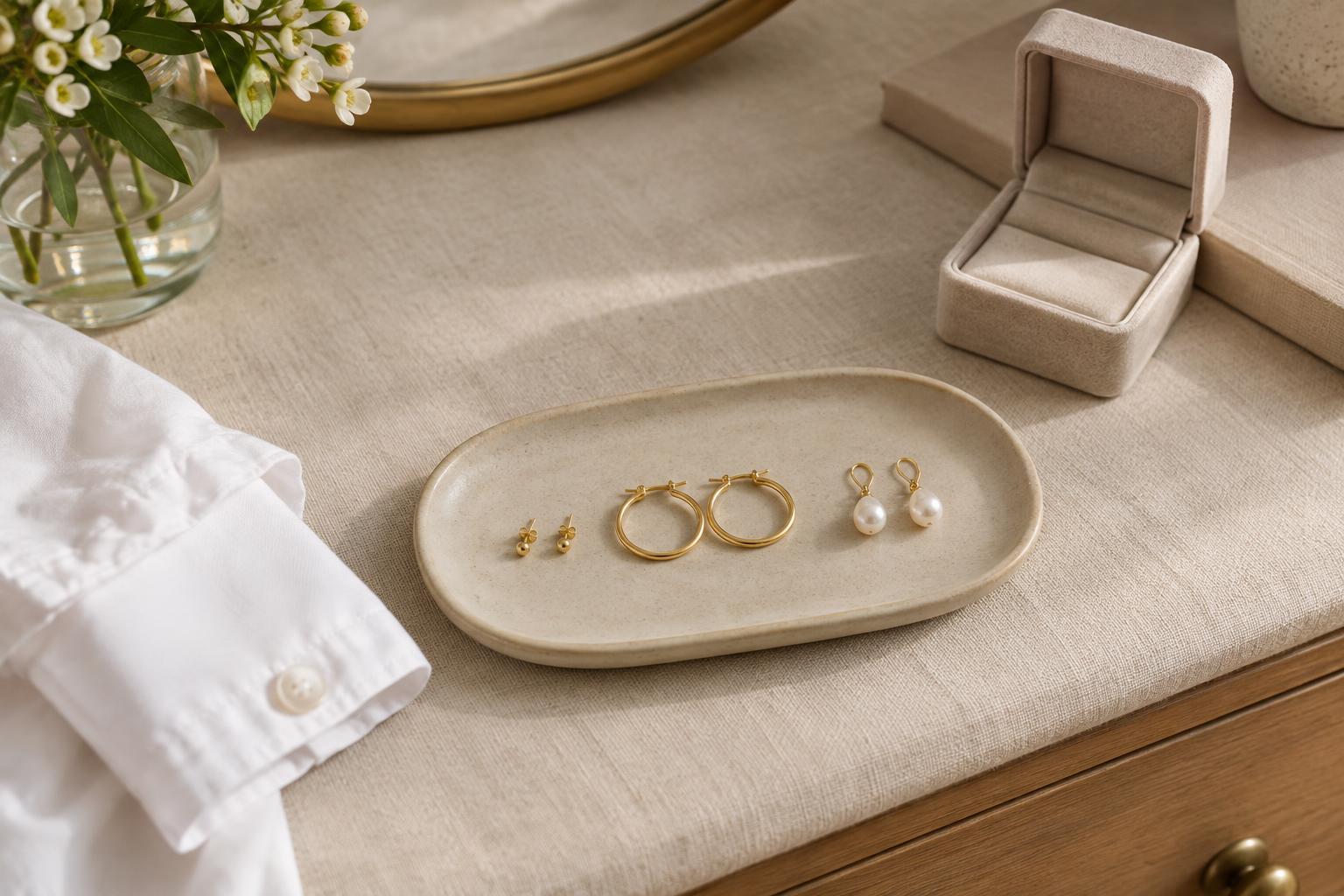
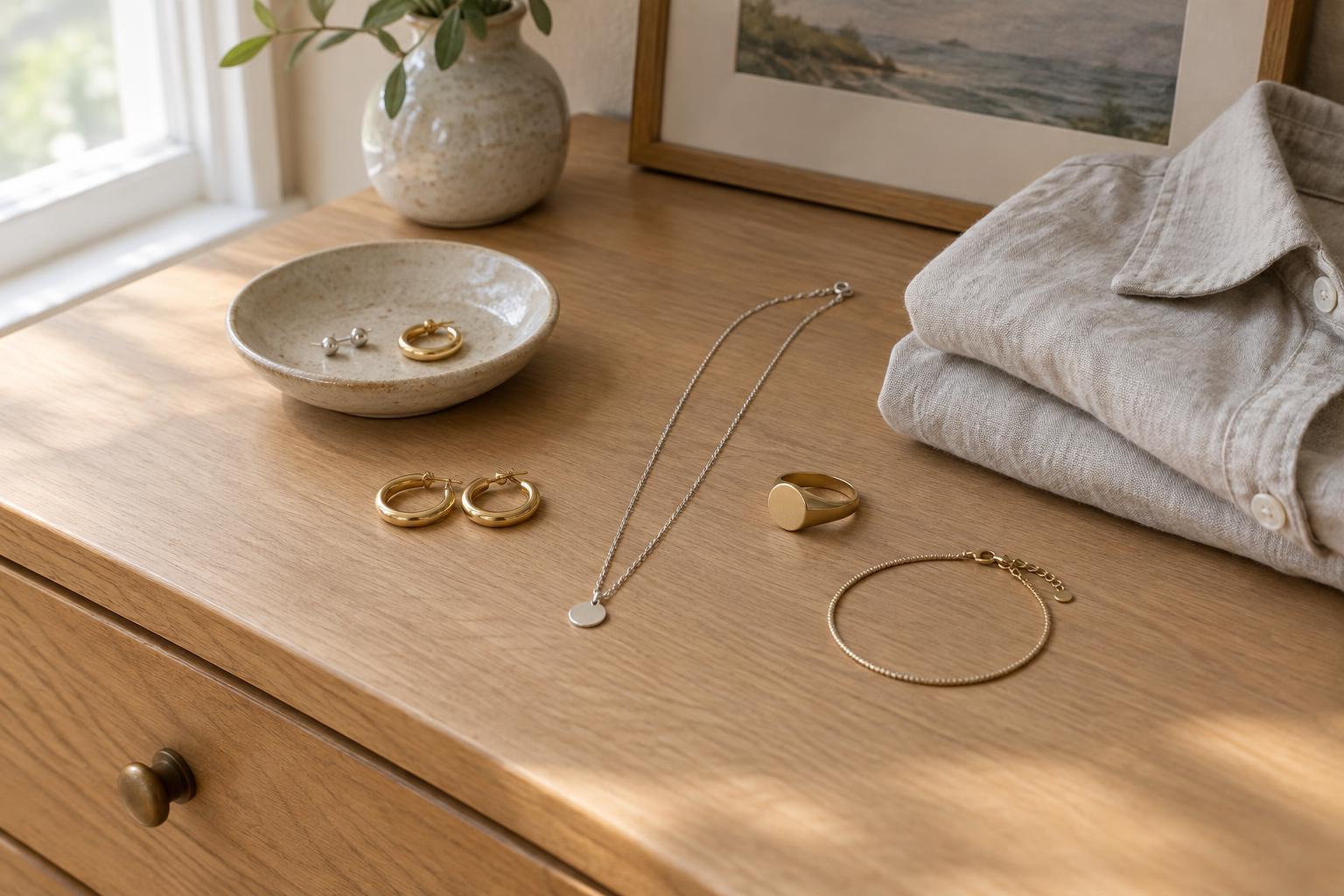
Begin with a small core of pieces that can be worn independently. Depending on your preferences, that might mean one pair of everyday earrings, one necklace, one ring, and a watch or bracelet. You do not have to fill every slot. If bracelets interfere with your sleeves or you never wear rings, leave them out. A rotation feels useful when each piece has a reason to be there.
Next, choose one or two pieces that change the mood of familiar outfits. A larger earring, a pendant with a distinct shape, or a colorful ring can make a simple shirt feel more deliberate without requiring a separate collection for special occasions. Look for variety in scale, texture, or color rather than buying several near-identical pieces. The goal is to have options you can distinguish at a glance, not a fixed number of items.
Shop for comfort and compatibility
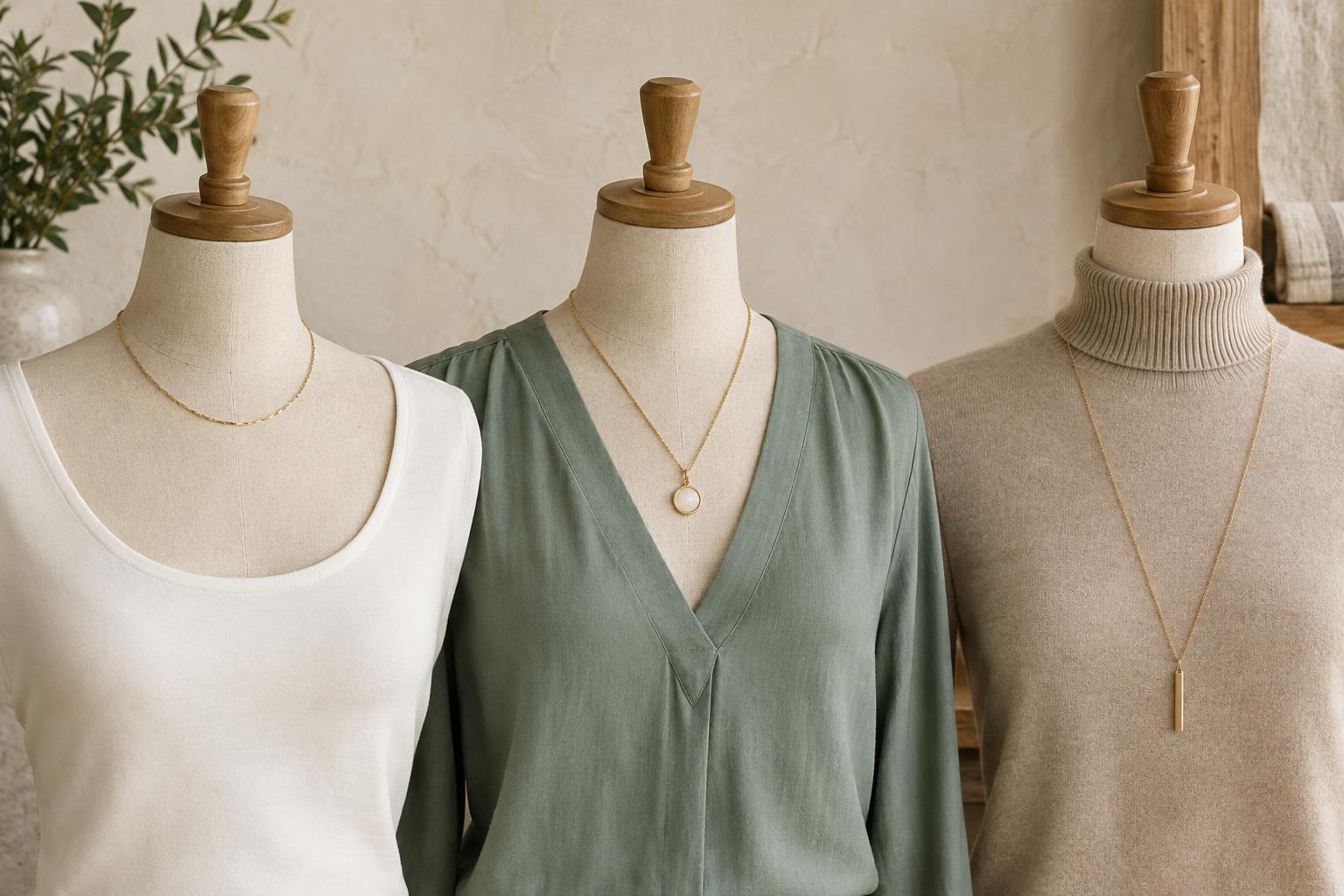
When you consider a new piece, picture it with at least three outfits you already wear. Check its length against your most common necklines and its scale against the collars, glasses, or other accessories you use. If you like layering, make sure the pieces sit at visibly different lengths or have enough contrast to look intentional. If you prefer putting on one item and leaving, a single piece with a clear shape may serve you better.
Comfort deserves the same attention as appearance. Consider weight, clasp size, sharp edges, and whether a piece moves or catches as you go about your day. Materials and finishes matter too, especially if you know certain ones irritate your skin. Product descriptions may help, but try a piece on when possible and check the return policy when you cannot. A beautiful item that requires constant adjustment is unlikely to become an everyday favorite.
Give everything an easy place to land
Storage can determine whether a small rotation stays usable. Keep your regular pieces visible and close to where you get dressed, while giving delicate chains enough separation to avoid tangles. A shallow tray, small divided box, or a few hooks can work; the best arrangement is the one you will use when you are tired. Put occasional and sentimental pieces somewhere safe without letting them crowd your daily choices.
Make a simple habit of returning jewelry to its place when you take it off. This helps you notice loose clasps, missing backs, and pieces that need cleaning before the next time you want to wear them. Follow any care guidance that came with an item, since different materials and finishes may need different treatment. You do not need an elaborate display or a complicated maintenance routine to keep a modest collection inviting.
Edit based on wear, not on rules
After a few weeks, look at what you have actually reached for. If one pair of earrings gets worn every day, that is useful information: perhaps it is comfortable, easy to fasten, and works with your clothes. A rarely worn piece may still deserve a place if you enjoy it for specific occasions. But if you repeatedly pass it over because it feels awkward, it does not need to remain in your everyday rotation.
Keep the rotation flexible as your routines and preferences change. You can swap in a seasonal favorite, retire something worn out, or pause before replacing a missing item to see whether you miss it. A small collection is not a test of restraint or a rule about how many pieces you may own. It is a way to make the jewelry you like easier to find, easier to wear, and more at home in your actual life.