Start with a loose plan, not a packed schedule
Rain can make a weekend feel as though it needs rescuing. Before filling every hour, ask what kind of break you actually want: a quiet reset, a little company, or the satisfaction of finishing something small. Pick one idea for the morning and one for later in the day. Leave the rest open. A loose plan gives the day a shape without turning time off into another list of obligations.
Set up a comfortable base with what is already at home. Move a chair nearer the window, bring a blanket into the living room, or clear the table so it is ready for a meal or a project. If several people are sharing the space, let everyone name one activity they would enjoy. Not every choice has to be a group activity; an hour spent separately can make the time together more pleasant.
Cook something that rewards a slow pace
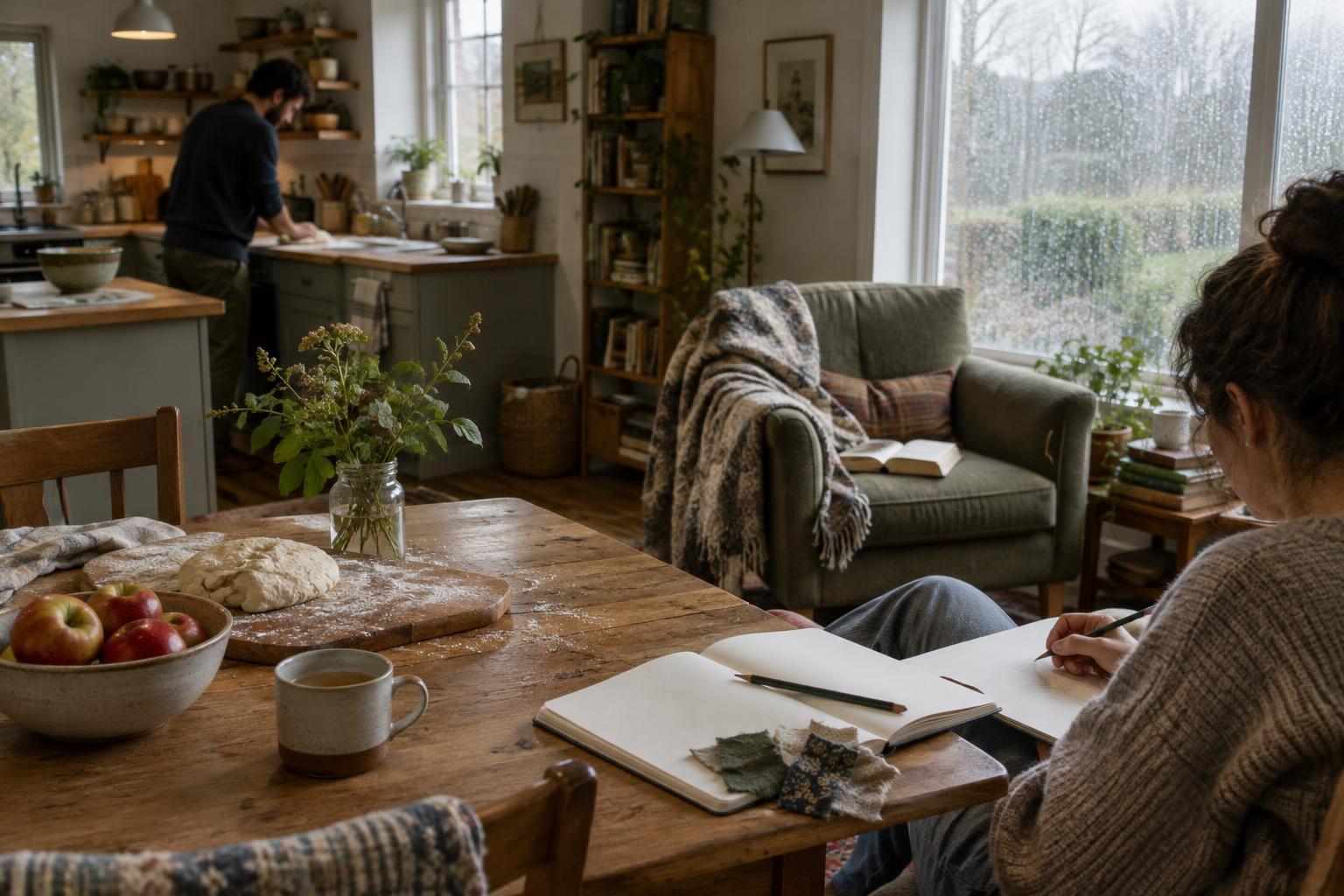
A rainy day suits food with a few unhurried steps. Make soup from vegetables that need using, bake a tray of potatoes to serve with whatever toppings are on hand, or assemble sandwiches and cut fruit for an indoor picnic. The point is not to produce an elaborate meal. Choose a dish that lets you use the kitchen as a place to spend time, rather than a task to rush through.
If you are cooking with someone else, divide the jobs by preference: one person chops, another sets the table, and someone chooses plates or napkins. Eating somewhere other than your usual spot can make a familiar meal feel different. Try a picnic blanket on the floor if that is comfortable, or move lunch to the table by the best window. Afterward, wash up together or leave the dishes for a set time so they do not loom over the afternoon.
Make a small change to a familiar room
You do not need new décor to refresh a space. Start with a single surface, such as a bedside table or a shelf. Remove everything, wipe it down, and return only the objects you want to see or use there. You might gather books in one place, move a lamp to a darker corner, or bring a plant into a room where you will enjoy it more. Keep walkways clear and avoid shifting anything too heavy.
For a more hands-on project, mend a loose button, sort a drawer, or gather stray household items and return them to their homes. Set a short stopping point before you begin. A small project is most satisfying when it ends with a usable space, not a larger pile waiting for Monday. If you find an object you have forgotten about, think of one way to put it to use this weekend.
Choose an activity with no finished-product pressure
Screen-free time does not have to be especially productive. Read a few chapters of a book, do a puzzle, play cards, or listen to the rain while writing a letter you may or may not send. If you feel like making something, use materials already in the house: sketch a room, fold paper into place cards, or write down a recipe you often cook from memory. You can stop when your interest fades.
With children or friends, try a shared activity that has simple rules and room for conversation. Build a blanket den, invent a story one sentence at a time, or play a guessing game using everyday objects. Offer two choices rather than asking everyone to agree on the perfect plan. If the group loses interest, change course; the activity has done its job if it made the afternoon enjoyable for a while.
Give the day a gentle ending
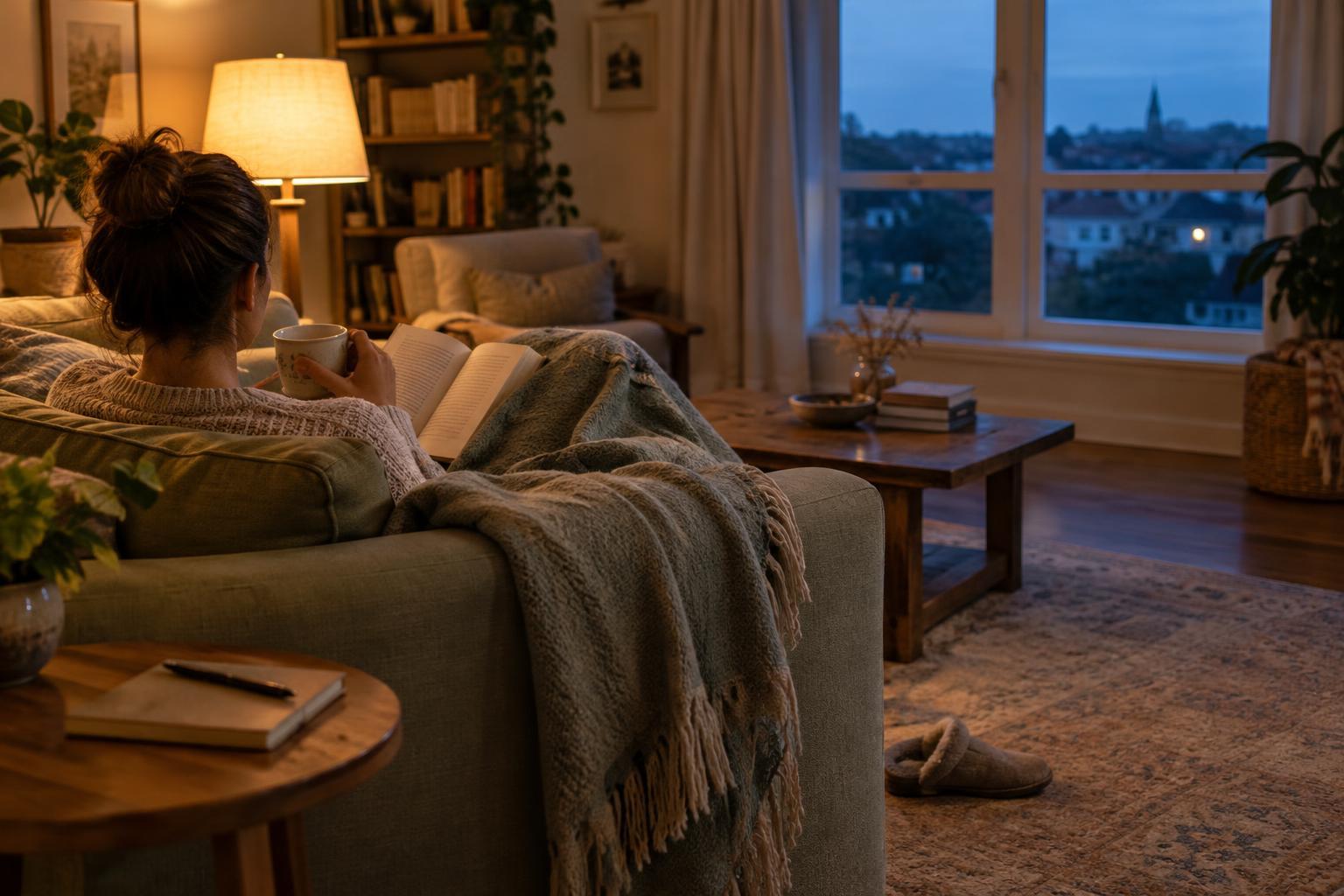
As evening approaches, resist the urge to measure the weekend by how much you accomplished. Put away the project supplies, make a simple dinner, and prepare one small thing that will ease the next morning, such as setting out a clean mug or clearing the kitchen counter. Then choose a quiet finish: a bath, a board game, a few pages of reading, or a conversation over a warm drink.
If the weather lets up, a short walk can be pleasant, but staying inside is a complete plan too. The most useful rainy-weekend idea is one you can adapt to your energy, your space, and the people around you. With a little room for rest as well as activity, an ordinary day indoors can feel like time well spent.